

Your body is amazing.
It helps you run, laugh, learn, play sports, hug people you love, and do all the things that make you you. But sometimes the parts of our bodies that are connected to periods, puberty, and reproduction can feel confusing or even a little awkward to talk about.
The truth is, these body parts are simply another part of how God designed the female body. Learning about them does not have to feel embarrassing. In fact, understanding your body can help you feel more confident and prepared as you grow.
Why Does Anatomy Matter?
Anatomy is just a big word that means the different parts of the body and what they do.
Knowing the names of your body parts can help you:
· Understand your menstrual cycle
· Talk with a parent or doctor if you have questions
· Learn what is normal
· Feel more comfortable and confident in your own body
Your body was created with wisdom and purpose, and every part has an important job.
The Outside
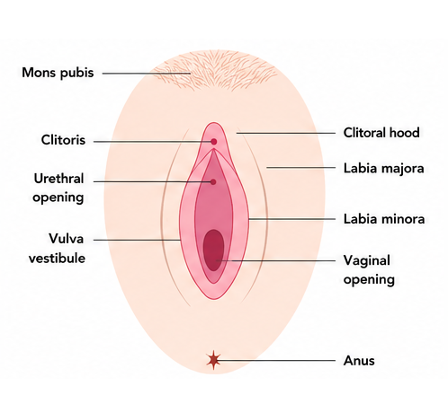
The Vulva
Many people use the word vagina to describe the entire female body, but the vagina is actually only one part.
The outside area of the female body is called the vulva.
The vulva includes:
· Labia: folds of skin that protect the body. Some girls have smaller labia, while others have larger labia. Both are normal.
· Clitoris: a small, sensitive body part located near the top of the vulva.
· Urethra: the opening where urine leaves the body.
· Vaginal opening: the opening to the vagina.
Just like noses, ears, or smiles, every vulva looks a little different. There is no single “normal” appearance.
The Inside
The Vagina
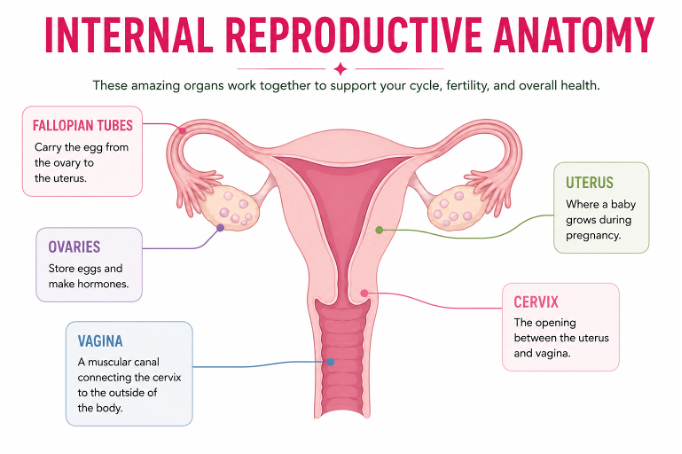
The vagina is a stretchy muscular canal inside the body.
Menstrual blood leaves the body through the vagina during a period. In adulthood, the vagina can also allow for sexual intercourse and childbirth.
The vagina is designed to keep itself healthy and clean. This is one reason some girls notice clear or white discharge in their underwear, especially as puberty begins. This discharge is usually normal.
The Uterus
The uterus is a small, pear-shaped organ located inside the pelvis.
One day, if a woman becomes pregnant, this is where a baby grows.
Each month, the uterus prepares a soft lining. If pregnancy does not happen, that lining leaves the body during a period.
The uterus is the reason periods happen.
The Ovaries
The ovaries are two small organs that sit on either side of the uterus.
Their job is to:
· Store eggs
· Release hormones
· Help guide the menstrual cycle
The ovaries make hormones like estrogen and progesterone, which act as messengers in the body and help coordinate the menstrual cycle.
The Pelvic Floor
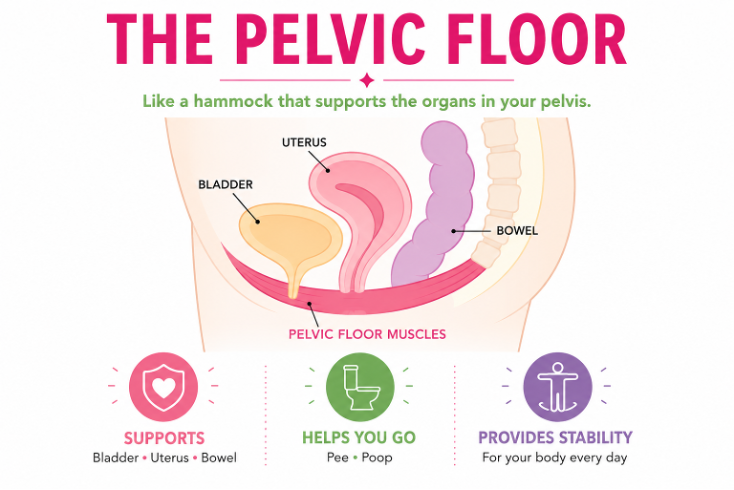
The pelvic floor is a group of muscles that sits at the bottom of the pelvis, almost like a hammock.
These muscles help:
· Support the bladder, uterus, and bowel
· Help you pee and poop
· Provide stability for your body
· Relax and tighten when needed
Many people have never heard of the pelvic floor, but these muscles are an important part of how the body works.
Every Body Develops Differently
Some girls start puberty earlier. Some start later.
Some girls develop breasts sooner. Others get their period first. Some grow taller quickly, while others grow more slowly.
All of these differences are normal.
Your body has its own timeline.
Comparing your body to your friends can sometimes make you feel worried, but everyone’s body develops differently.
God Created Our Bodies With Purpose
Sometimes people talk about our bodies as if they are embarrassing or something to hide. But Scripture reminds us that we are “fearfully and wonderfully made” (Psalm 139:14).
Learning about your body is not something to feel ashamed of. It is one way of understanding and caring for the body God has given you.
Questions are welcome. Curiosity is healthy. And growing up is something you do not have to navigate alone.
Remember This
Your body was created with wisdom and purpose.
Every body looks a little different.
There is no “perfect” timeline for growing up.
Learning about your body is a good thing.
Questions are always okay.
The more you understand your body, the more confident you can feel as you grow.
